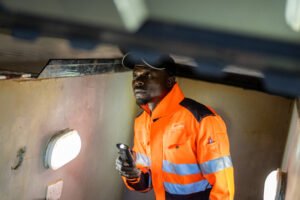
A roadworthiness inspection can feel like a formality, something you get through so you can register a vehicle or keep it legally on the road. But underneath the paperwork is a much simpler idea: before a vehicle is driven on public roads, someone independent should confirm it is actually safe to be there.
That idea is not unique to Zambia. Countries around the world require some form of periodic vehicle inspection, because the alternative, letting every vehicle’s condition go unchecked, has real consequences. Brakes wear down gradually, often without an obvious warning sign until the moment they are needed most. Steering and suspension components loosen over time. Headlights drift out of alignment. None of these are necessarily visible from the driver’s seat, which is exactly why an independent, standardized inspection matters.
In Zambia, this is formalized through Zambia Standard ZS 560, which sets out the requirements for roadworthiness inspection of vehicles, and is overseen by the Zambia Compulsory Standards Agency. For used vehicles imported from markets like Japan, the UAE, Singapore, the UK, South Africa, and the US, this inspection is a required step, carried out by accredited partners like AAA on behalf of AutoTerminal Japan, which has operated internationally since 1997.
What actually gets checked reflects how broad “roadworthiness” really is. It covers braking performance, front, rear, and parking brakes tested separately. It covers steering and suspension, since both affect a driver’s ability to control the vehicle in an emergency. It covers tyre condition, headlight alignment and intensity, exhaust emissions, and structural integrity of the frame and body. Each of these exists on the checklist because each one, left unchecked, has been shown to contribute to accidents, injuries, or environmental harm.
That last part, emissions, is worth sitting with for a moment. Roadworthiness inspection is not only about collision risk. Measuring a petrol vehicle’s emissions output or a diesel vehicle’s smoke opacity is about air quality and environmental responsibility, something that matters for everyone sharing the road, not just the vehicle’s owner.
This is also why inspection has to be done by someone independent and accredited, rather than left to self-assessment. AAA operates under ISO/IEC 17020:2012 accreditation, which exists specifically to ensure inspection bodies are competent, consistent, and impartial. That matters because the value of a roadworthiness inspection depends entirely on whether you can trust the result. A pass needs to actually mean the vehicle is safe. A flagged defect needs to be real, not arbitrary.
Ultimately, roadworthiness inspection exists to answer one question honestly: is this vehicle safe enough to be on the road, for its driver, its passengers, and everyone else around it. That is not a bureaucratic exercise. It is the foundation that road safety in Zambia, and the confidence of every vehicle owner and buyer, is built on.